
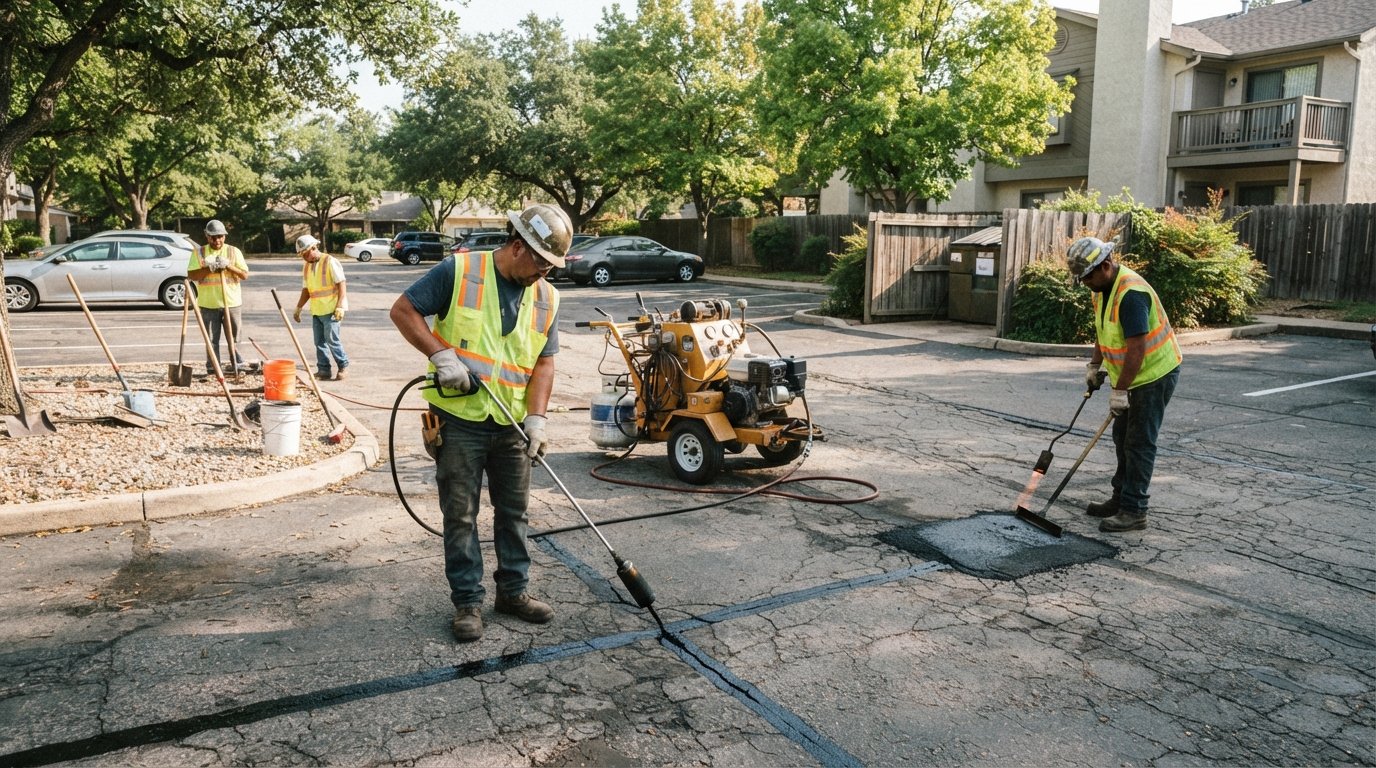
Asphalt Crack Sealing and Pothole Repair for HOAs
Asphalt crack sealing and pothole repair for HOAs protects property values. Call DRT Grading & Paving at 9258629900 for East Bay service.

By Daniel Hayes
Learn more about asphalt maintenance for guides, costs, and what to expect.
Planning a grading or paving job?
Send the project details, a budget range, and when you want to start.
A cracked, crumbling parking lot is more than an eyesore for a homeowners association. It is a liability, a budgeting headache, and a signal to every resident and visitor that the property is not being maintained. Water seeps into every crack, freezes or expands under East Bay heat cycles, and turns a hairline fracture into a pothole within a single rainy season. By the time the board receives complaints, the damage has usually doubled in cost.
The good news is that asphalt crack sealing and pothole repair for HOAs is one of the most cost-effective forms of preventive maintenance available. A well-timed crack seal and pothole patch can extend the life of a parking lot by five to seven years, deferring full replacement costs that routinely run into the hundreds of thousands of dollars for a typical community. This article explains how HOA boards in the East Bay should plan, budget, and execute these repairs, and when to bring in a professional paving contractor to protect the association's reserve funds.
Why Asphalt Fails in HOA Parking Lots
Asphalt is a flexible pavement, which means it is designed to move slightly with traffic and temperature changes. Over time, that flexibility breaks down. Oxidation from the sun dries out the binder, traffic loads fatigue the surface, and water finds its way into any opening. In HOA communities, several factors accelerate the process.
First, HOA lots often have heavy use patterns. Garbage trucks, delivery vehicles, and service vans concentrate loads in specific areas, such as dumpster pads and fire lanes. Second, many communities have mature landscaping with tree roots that push upward from below, cracking the asphalt from the underside. Third, drainage problems, whether from poor original grading or clogged catch basins, allow water to pool and soften the subgrade.
The result is a predictable pattern of failure that boards should learn to recognize:
- Hairline and block cracks: Early-stage cracking from oxidation and minor settling. These are ideal candidates for crack sealing.
- Alligator cracking: A web-like pattern that usually indicates subgrade failure or structural fatigue. Patching alone will not fix this.
- Potholes: Broken pavement where traffic has dislodged a weakened section. These require immediate patching to prevent vehicle damage and injury claims.
- Depressions and birdbaths: Low spots that hold water and accelerate deterioration. These may need full-depth repair or drainage correction.
- Raveling and weathering: Loss of surface aggregate, leaving a rough, exposed texture. This is often a precursor to more serious cracking.
Understanding which type of failure the association is facing is the first step in choosing the right repair. Crack sealing and pothole patching are not the same as a full mill-and-overlay. Using the wrong solution wastes reserve funds and can even make the problem worse.
What Crack Sealing Actually Does for an HOA
Crack sealing is the process of cleaning cracks in the asphalt surface and filling them with a hot-pour rubberized sealant. The sealant remains flexible, bonding to the crack walls and moving with the pavement as temperatures change. It does not glue the asphalt back together, and it does not restore structural strength. What it does is keep water out.
Water is the single greatest enemy of an asphalt parking lot. When water enters a crack and reaches the base layer, it softens the subgrade and leads to pumping, settling, and eventually potholes. By sealing cracks early, an HOA can prevent that chain reaction. The cost of sealing a few hundred linear feet of cracks is a fraction of the cost of repairing the base and repaving the area later.
For HOA boards, crack sealing offers three concrete benefits:
- Extended pavement life: Sealing cracks at the right time can add five to seven years to the asphalt's service life.
- Reduced liability: Smooth, sealed surfaces reduce trip-and-fall hazards and vehicle damage claims.
- Budget predictability: Preventive maintenance is far easier to plan for than emergency repairs after a pothole damages a resident's car.
The key is timing. Cracks should be sealed when they are still relatively narrow, typically less than half an inch wide. Once cracks exceed that width or begin to show signs of edge deterioration, crack sealing alone may not be enough, and a more comprehensive repair may be needed.
Pothole Repair: More Than Just Filling a Hole
Potholes are the most visible and most urgent form of asphalt failure. They form when water penetrates the pavement, weakens the base, and traffic dislodges the broken material. In an HOA, a single pothole can generate multiple complaints, damage vehicles, and create a serious liability exposure if someone trips or falls.
There are several methods for repairing potholes, and the right choice depends on the size, depth, and underlying cause. The most common approaches include:
- Throw-and-roll patching: A temporary fix where cold patch material is placed in the hole and compacted by traffic. This is best for emergency situations but is not a long-term solution.
- Semi-permanent patching: The hole is cleaned, squared up, and filled with hot-mix asphalt, then compacted with a plate compactor or roller. This can last several years if the subgrade is stable.
- Full-depth repair: The failed asphalt and underlying base material are removed and replaced with new base and hot-mix asphalt. This is the most durable solution for structural potholes.
- Infrared patching: The existing asphalt around the pothole is heated and mixed with new material, creating a seamless repair. This is a good option for larger areas and can be more cost-effective than full-depth repair in some cases.
For HOA boards, the critical takeaway is that not all pothole repairs are equal. A quick cold-patch fix may get the association through the rainy season, but it will likely fail within a year. A properly prepared and compacted hot-mix patch, or a full-depth repair for structural failures, will last far longer and cost less over time. A qualified paving contractor can evaluate the pothole and recommend the right approach.
How Often Should an HOA Schedule Crack Sealing and Pothole Repair?
There is no single answer that fits every community, but most East Bay HOAs should plan on a pavement inspection every year and crack sealing every two to three years. Pothole repair is reactive and should be addressed as soon as a pothole appears, especially in high-traffic areas.
The best time to seal cracks is during dry, warm weather, typically late spring through early fall. Sealant needs to be applied when cracks are clean and dry, and it needs time to cure before rain or heavy traffic. In the East Bay, the window from May through September is usually ideal.
Pothole repair can be done year-round in most cases, but hot-mix asphalt is more readily available and easier to work with in warmer months. If a pothole appears during the rainy season, a temporary cold-patch repair may be necessary until permanent repairs can be made.
Boards should also consider the age of the pavement. A new parking lot may not need crack sealing for the first three to five years, while an older lot may need it every two years. Keeping a simple pavement log, with dates of inspections and repairs, helps the board track conditions and make informed budget decisions.
Budgeting for Asphalt Maintenance in HOA Reserve Studies
One of the most common mistakes HOA boards make is failing to include asphalt maintenance in the reserve study. Reserve studies typically focus on major components like roofs, siding, and paving replacement, but they often overlook the recurring cost of crack sealing and pothole repair. When these costs are not budgeted, the board is forced to use operating funds or special assessments, which can create friction with homeowners.
A well-prepared reserve study should include a line item for asphalt maintenance every two to three years, with an allowance for pothole repair as needed. The exact amount depends on the size of the parking lot, the condition of the pavement, and local labor rates. As a rule of thumb, crack sealing costs a fraction of what full replacement costs, so funding preventive maintenance is one of the highest-return investments an HOA can make.
Boards should also consider the impact of deferred maintenance on property values. A parking lot with widespread cracking and potholes makes the community look neglected and can lower home values. Conversely, a well-maintained lot signals that the association is financially healthy and proactive.
Choosing the Right Contractor for HOA Asphalt Repairs
Not all paving contractors are equally qualified to work with HOAs. The right contractor should have experience with community associations, understand the importance of clear communication, and be able to provide detailed proposals that boards can review and approve.
When evaluating contractors, boards should ask for:
- Proof of insurance: General liability and workers' compensation coverage are essential.
- References from other HOAs: A contractor who has worked with community associations understands the unique scheduling and communication needs.
- Detailed scope of work: The proposal should specify the type of sealant, the method of repair, and the estimated timeline.
- Warranty: A reputable contractor will stand behind their work with a written warranty.
- Local expertise: A contractor familiar with East Bay soil conditions, weather patterns, and local regulations will deliver better results.
For HOAs in the East Bay, working with a local contractor like DRT Grading & Paving offers advantages. The company has experience with both new construction and maintenance, including work for HOAs and school districts. Their team understands the importance of minimizing disruption to residents while completing repairs efficiently and correctly.
Step-by-Step: Planning an HOA Crack Sealing and Pothole Repair Project
Managing a pavement repair project does not have to be overwhelming. The following steps outline a practical process that HOA boards can follow to ensure the work is done right, on time, and within budget.
- Conduct a pavement inspection: Walk the property with a knowledgeable contractor or engineer. Identify the location and severity of cracks, potholes, and other distress. Take photos and notes.
- Set priorities: Not all repairs are equally urgent. Potholes in high-traffic areas should be addressed first. Cracks that are allowing water into the base should be sealed before they worsen.
- Obtain multiple proposals: Get at least two or three written estimates from qualified contractors. Compare not just price but also scope, materials, and warranty.
- Review and approve: The board should review the proposals and select a contractor. If the project exceeds the board's spending authority, it may need homeowner approval.
- Schedule the work: Coordinate with the contractor to minimize disruption. Provide advance notice to residents about parking restrictions and work hours.
- Inspect the finished work: After completion, walk the property with the contractor to ensure all repairs meet the agreed scope. Address any issues promptly.
Following a structured process helps boards avoid common pitfalls, such as hiring an unqualified contractor, paying too much for temporary fixes, or failing to budget for future maintenance.
Common Mistakes HOAs Make with Asphalt Maintenance
Even well-intentioned boards can fall into traps that cost the association money. One common mistake is waiting too long to address cracks. A crack that is sealed early costs a few dollars per linear foot. A crack that is ignored until it becomes a pothole can cost hundreds of dollars per square foot to repair. Another mistake is using the wrong repair method. Cold patch is fine for a temporary fix, but it is not a substitute for proper hot-mix repair.
Boards also sometimes choose a contractor based solely on the lowest bid. While price matters, the lowest bid may not include proper surface preparation, quality materials, or a warranty. In the long run, a slightly higher bid from a reputable contractor often costs less because the repairs last longer.
Finally, many HOAs fail to plan for maintenance. Asphalt is not a one-time expense. It requires ongoing care to reach its full lifespan. By including crack sealing and pothole repair in the annual budget and reserve study, boards can avoid surprise expenses and keep the community looking its best.
When to Call a Professional Paving Contractor
Some HOA maintenance tasks can be handled by volunteers or a handyman, but asphalt repair is not one of them. Crack sealing requires specialized equipment to clean cracks and apply hot sealant at the correct temperature. Pothole repair requires proper excavation, base preparation, and compaction. Attempting these repairs without the right tools and training often leads to failures that cost more to fix than if a professional had been hired from the start.
If the association is dealing with widespread cracking, multiple potholes, or signs of structural failure such as alligator cracking or depressions, it is time to call a professional. A qualified contractor can assess the condition of the pavement, recommend the most cost-effective repair strategy, and perform the work safely and efficiently.
DRT Grading & Paving serves HOAs, school districts, and commercial property owners throughout the East Bay. Their team specializes in asphalt crack sealing and pothole repair for HOAs, as well as new construction grading and paving for shopping centers and restaurant sites. To schedule an inspection or request a quote, contact DRT Grading & Paving at (925) 862-9900 or visit their website.
Protecting an HOA's asphalt is not just about appearance. It is about safeguarding property values, reducing liability, and making smart use of reserve funds. With a proactive approach to crack sealing and pothole repair, boards can extend the life of their parking lots and avoid the costly consequences of neglect.