Asphalt Lifecycle: Repair, Resurface, or Replace Parking Lot
Compare asphalt lifecycle repair, resurface, or replace parking lot options before you spend. Call DRT Grading & Paving at 9258629900 for an East Bay assessment.

Learn more about asphalt maintenance for guides, costs, and what to expect.
Planning a grading or paving job?
Send the project details, a budget range, and when you want to start.
A parking lot is one of the most expensive assets your property owns, and it is also one of the most ignored until cracks turn into craters. Every asphalt surface moves through a predictable lifecycle: fresh pavement, early wear, visible distress, structural failure, and full reconstruction. The decision to repair, resurface, or replace a parking lot is not a coin flip. It depends on where your pavement sits in that lifecycle, how the base layer is holding up, and how much traffic the lot carries every day. Property managers, HOA boards, school district facility teams, and commercial developers across the East Bay face this exact question every budget cycle. Choose the wrong option and you either overspend on a surface that was already failing underneath, or you patch a problem that returns bigger within two winters. This guide walks through the asphalt lifecycle, the real signals that separate a maintenance job from a reconstruction job, and how to plan the work so your capital dollars go as far as possible.
The Four Stages of the Asphalt Lifecycle
Asphalt does not fail overnight. It ages through recognizable stages, and each stage has a cost-effective response. Understanding where a lot sits in this timeline is the foundation of every repair, resurface, or replace decision.
Stage one: new pavement (years 0 to 5). A properly built lot with good drainage and a solid aggregate base performs well with almost no intervention. This is the window for preventive maintenance, not repairs. Seal coating, crack sealing, and keeping the lot clean and drained are the entire playbook. Money spent here protects the full lifespan of the surface.
Stage two: early aging (years 5 to 10). Oxidation sets in. The binder that holds the aggregate together begins to dry out, the surface lightens, and hairline cracks appear. This is the highest-return window for resurfacing decisions because the pavement structure is still sound. A seal coat or a thin overlay now can add a decade of service life.
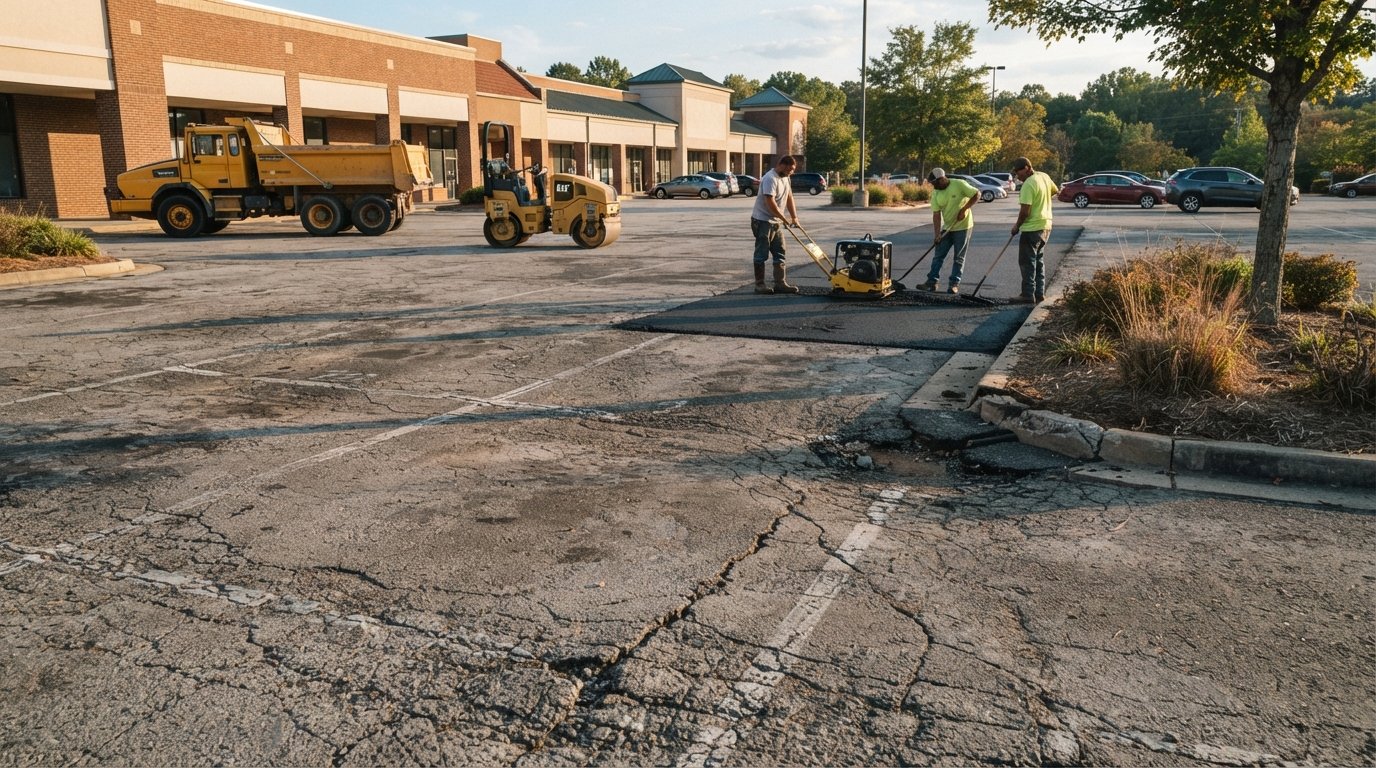
Stage three: active deterioration (years 10 to 20). Cracks widen, water gets in, alligator cracking spreads, and potholes form at the worst spots. Repairs still work, but they become more frequent and more expensive. This is where the repair versus resurface question gets serious.
Stage four: structural failure (years 20 and beyond, or sooner with heavy loads). When the base beneath the asphalt has failed, no surface treatment will save the lot. Patching becomes a treadmill. Full-depth reconstruction, which means removing the failed pavement, repairing or rebuilding the base, and placing new asphalt, is the only durable answer.
Repair, Resurface, or Replace: How to Choose
Each option solves a different problem, and the right choice comes down to whether the problem is in the surface layer or the structure beneath it. Here is how the three approaches compare in practice.
- Repair: Targets isolated defects such as potholes, localized alligator cracking, utility cuts, and small areas of base failure. Best when damage covers less than roughly 15 to 20 percent of the lot and the rest of the pavement is sound.
- Resurface (overlay): Grinds or levels the existing surface and places a new layer of asphalt on top, typically 1.5 to 2 inches. Best when the pavement is worn and cracked across large areas but the base is still structurally sound.
- Replace (reconstruction): Removes the asphalt, repairs or rebuilds the aggregate base, and paves fresh. Best when widespread alligator cracking, deep rutting, or subgrade failure shows the foundation itself has given out.
One rule of thumb professionals use: if you can stand at the edge of the lot and see cracking that looks like a spider web across more than a quarter of the surface, the base is likely compromised and an overlay will simply crack through within a few years. Conversely, if the distress is limited to a handful of areas and the rest of the lot drains well and feels solid underfoot, targeted repairs plus a seal coat can be the smartest money you spend all year.
Timing also matters. An overlay placed on a lot in stage two can push replacement out by 10 to 15 years. The same overlay placed on a lot in stage four is money thrown away. That is why any honest evaluation starts with core samples or test pits to check base thickness and condition, not just a visual walk of the surface.
Repair Options That Actually Last
Repairs range from quick cosmetic fixes to structural corrections, and choosing the right one depends on what caused the damage in the first place. Water is the enemy in almost every case, so any repair that does not address drainage is temporary by design.
Crack sealing is the least expensive and most underused tool in pavement management. Routing and filling cracks before water reaches the base can slow deterioration dramatically. It is a routine part of any well-run asphalt maintenance program for HOAs, school districts, and commercial properties.
Patching handles potholes and isolated failures. A high-quality patch involves cutting clean edges, removing loose material, compacting the base, and placing hot-mix asphalt in lifts. Spray-inject and cold-patch methods exist, but hot-mix patches compacted in layers outperform them in almost every commercial setting.
Full-depth repair is the heavy hitter. Crews cut out the failed area down to the base, correct the base and any drainage issues, then rebuild the pavement section to match the surrounding lot. This is the right fix for utility cuts that have settled, sinkholes, and localized base failures. Done correctly, a full-depth repair is invisible and permanent.
The mistake property owners make most often is stacking patches on top of patches without ever asking why the area keeps failing. If the same spot blows out every year, the problem is under the asphalt, not in it.
When Resurfacing Is the Right Call
Resurfacing, also called an overlay, is the middle path: significantly less expensive than reconstruction, dramatically more durable than patching a failing lot. It works when the existing pavement is still doing its structural job but the surface has aged out.
A good resurfacing candidate has widespread surface cracking, oxidation, and raveling, but no significant rutting, no pumping at the edges, and no large areas of alligator cracking. Before the overlay goes down, crews typically mill down the high spots, repair any localized failures, and apply a tack coat so the new layer bonds properly. Skipping those steps is how overlays fail early.
For East Bay properties, resurfacing also offers a practical scheduling advantage. An overlay can often be completed in phases, keeping portions of a shopping center, school lot, or HOA drive open while work proceeds. That phased approach matters when you cannot shut down access entirely.
One caution: an overlay adds thickness and weight. Curb heights, drainage inlets, and parking stall transitions all need to be checked so water still flows off the lot instead of ponding against the new surface. A contractor who does not raise this issue before bidding is not planning the job properly.
When Full Replacement Is Unavoidable
Replacement is the most expensive option, and it is also the one that property owners delay the longest. The problem is that delaying reconstruction past the point of structural failure does not save money. It converts a planned capital project into an emergency repair, usually at the worst possible time of year.
Clear signals that replacement is the right answer include:
- Alligator cracking covering more than 25 to 30 percent of the lot, especially in wheel paths.
- Deep rutting or shoving where tires travel, indicating the base or subgrade cannot support loads.
- Potholes that reappear in the same locations within months of repair.
- Ponding water that sits for days after rain because the lot has settled or drainage has failed.
- Pavement age beyond 20 to 25 years with a history of escalating maintenance costs.
When several of these appear together, patching and overlays become a subscription service with no end date. Reconstruction resets the clock: new base where needed, new asphalt, corrected drainage, and a fresh lifecycle that can run another 20 to 30 years with routine maintenance.
Reconstruction is also the moment to fix what the original build got wrong. Poor grading that sends water toward the building, undersized base for modern truck traffic, and inadequate drainage are all correctable during a full replacement. For commercial developers and property managers in the East Bay, that is often the hidden value in a reconstruction project.
Building a Pavement Management Plan That Saves Money
The properties that spend the least on asphalt over 30 years are not the ones that never repair anything. They are the ones that inspect regularly, act early, and keep a documented history of every treatment. Pavement management is boring, and it works.
A practical plan starts with a professional assessment that rates each section of the lot and estimates remaining service life. From there, you can map out a multi-year schedule: seal coating in the early years, crack sealing and patching as wear appears, an overlay when the surface ages out, and reconstruction only when the structure demands it. Spreading those costs across budget cycles is far easier than absorbing a surprise five-figure emergency.
For HOAs and school districts, this planning discipline is especially important because funding comes from reserves or bond measures that require advance notice. A pavement assessment with clear photos, ratings, and cost estimates gives boards and administrators the documentation they need to justify the spend. For shopping center and restaurant site owners, a maintenance plan protects curb appeal, reduces liability from trip hazards and potholes, and keeps tenants and customers happy.
Working with a local contractor who handles both new construction grading and ongoing asphalt maintenance matters here. The same base and drainage knowledge that goes into building a new commercial lot from the ground up is exactly what is needed to judge whether an existing lot can be saved with an overlay or must be rebuilt. That perspective, applied early, is what keeps a parking lot out of the emergency repair column.
Getting the Decision Right the First Time
The asphalt lifecycle repair resurface or replace parking lot decision comes down to one question: is the problem in the surface or in the structure? Surface problems respond to sealing, patching, and overlays. Structural problems require reconstruction, and no amount of patching will change that. The most expensive mistake is not choosing replacement too early; it is choosing it too late, after years of repair spending that could have funded a permanent fix.
If your lot is showing cracks, potholes, or ponding, the right next step is a professional evaluation that looks below the surface, not just at it. Whether you manage an HOA, run a school district facility team, or own a commercial center in the East Bay, a clear-eyed assessment now will tell you which lifecycle stage you are in and which treatment delivers the best return. That is how you protect the asset, the budget, and the people who use the lot every day.